
During International Neonatal Therapy Week (INTW), we are thrilled to feature Cecilia Naboni, a dedicated neonatal therapist and PhD candidate from Pavia, Italy. As a NANT Member and recipient of the NANT International Scholarship, Cecilia shares how the global connections, shared resources and education, and advocacy fostered through NANT are advancing neonatal therapy in Italy—and strengthening our collective impact on infants and families worldwide.
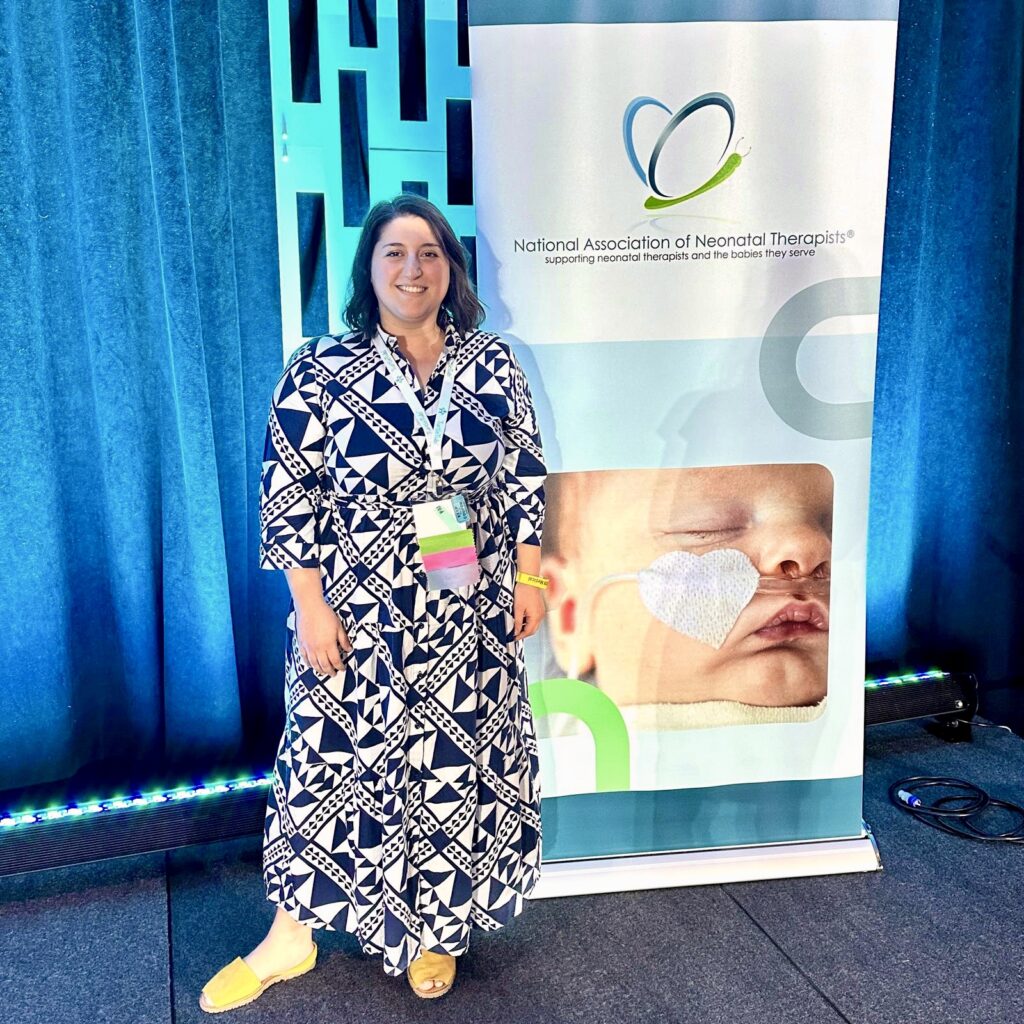
Q: What inspired you to pursue a career in neonatal therapy?
Cecilia: My path wasn’t a straight line. I originally focused on foreign languages with a dream of becoming an interpreter, but I found myself drawn to the medical field, to child development and neuroscience. When I discovered TNPEE – the program that trains neuropsychomotor therapists for developmental age – I knew I had found the degree that was meant for me.
Working as a therapist for neurodevelopmental disorders became a natural next step. From early on in my training, I recognized my instinctive pull toward the youngest patients – the tiniest ones – and toward the first thousand days of life. I took my first steps, quite literally on tiptoe, into a NICU as a student. It was there that I found my place. I felt, simply, at home.
And in a way, I’m happy to say I did become an interpreter after all, just not the kind I once imagined. Instead of translating between languages at conferences or in institutional settings, I find myself every day translating the language of newborns: behavior. Especially preterm infants and those with neurological risk in the NICU, whose behavior speaks volumes if we know how to read it. I share that language with their parents, and with the other professionals working within this highly complex unit.
Q: As an international therapist, what motivated you to join NANT?
Cecilia: I was moved by NANT’s vision to improve neurodevelopmental outcomes while infants are still in the NICU. Through my clinical experience, I have consistently observed the benefits of early intervention that is evidence-based, timely, and respectful of the needs of both infant and family. In NANT’s values, I find the richness (and the necessity) of teamwork, professional exchange, and mutual respect.
Engaging with the community, I quickly realized this was a group I was called to be part of. Connecting with therapists internationally matters deeply to me: it keeps me engaged with evolving practices and perspectives that continually challenge and improve my own work. I believe strongly in community engagement, and being a NANT member has allowed me to build relationships with colleagues who inspire me to keep learning.
Q: How have you felt supported or inspired through your NANT membership?
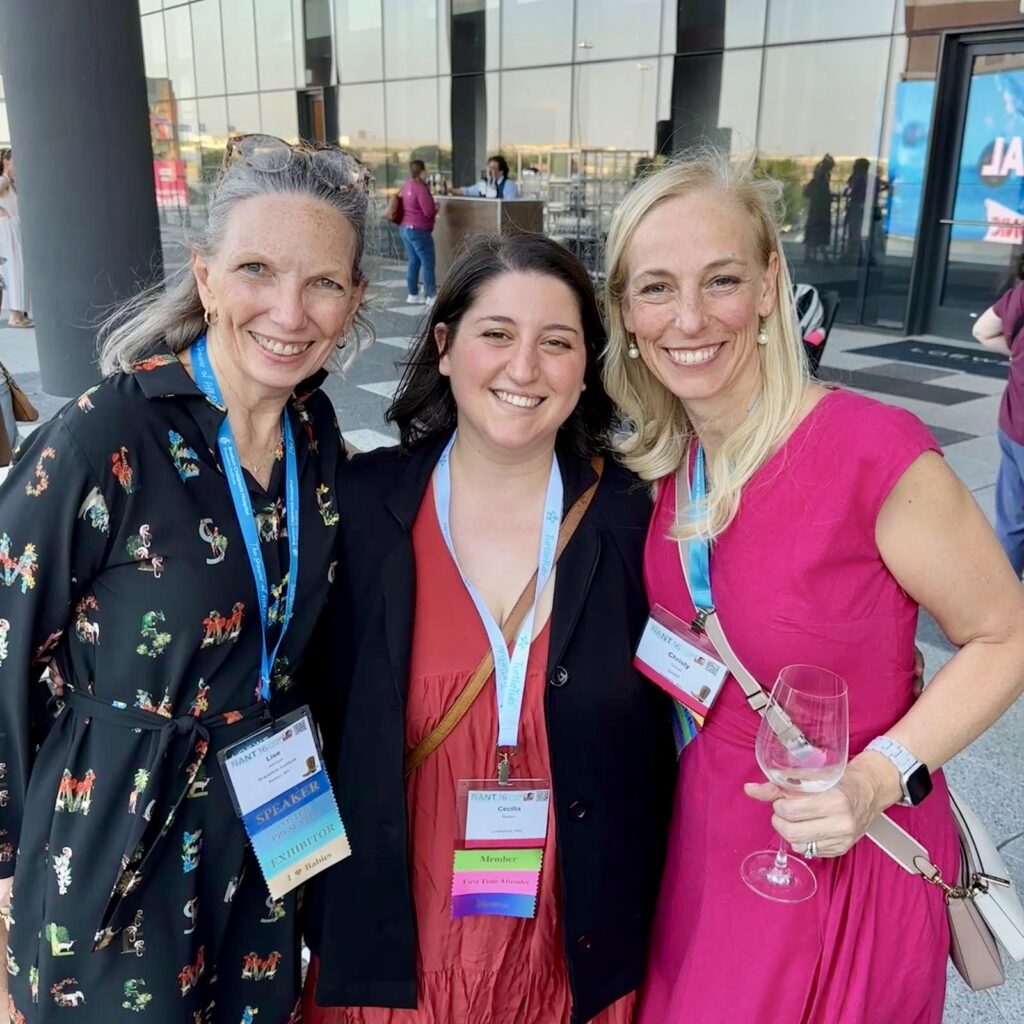
Cecilia: One experience stands out above all: the NANT Conference 2026, which I was able to attend thanks to NANT’s own International Scholarship. It was an incredibly rich occasion, both professionally and personally.
Despite the geographical distance from most NANT members, I feel continuously connected through the newsletter and the courses offered: they give me the chance to engage hands-on with tools and resources that are always up to date and of great clinical and therapeutic value.
NANT has also inspired me on a more personal level: it has strengthened my desire to connect with professionals in my own region, to exchange perspectives, resources, and knowledge in a way that is more solid and organized.
Q: Tell us about a project or area of practice you are passionate about.
Cecilia: Alongside my clinical work, I’m also a PhD Candidate. For the past few years, I’ve been involved in projects focused on early detection and early intervention for high-risk infants in the NICU, ranging from extremely preterm infants to those at high neurological risk, supporting families. My focus is on neuroprotective strategies that can be implemented in a strategic and innovative way, with the goal of bringing the clinical setting and scientific research closer together in a field as specific and complex as pediatric neuroscience.
Beyond my clinical and research work, I’m a strong advocate for therapists. In Italy, I carry on projects aimed at raising awareness of and disseminating the work of TNPEEs within the neonatal clinical setting.
Q: What were your most meaningful takeaways from the NANT 16 conference?
Cecilia: Every session was truly special, full of strategies and insights I could bring directly back into my own clinical practice. I came home with scientific updates, ideas for family-centered care, and tools for assessing neonatal competencies, as well as resources to support therapists’ own practice.
But more than anything, what I valued most were the moments of community. I felt at home from the very first moment to the last, and I built relationships that are continuing, and that I know will keep growing in the future! The conference was organized down to the smallest detail, and the moments dedicated to newcomers, students, and international therapists were deeply appreciated.
I also came away with wonderful discoveries and connections through the sponsor exhibitions. As a therapist working in Europe, it was exciting and inspiring to see new products that haven’t yet reached our market.
Q: How did learning alongside therapists from other countries impact your perspective?
Cecilia: I certainly noticed some differences, but more than anything, it was reassuring to discover that, in many ways, we are “all in the same boat”. The colleagues I had the pleasure of meeting and exchanging ideas with all recognize the ongoing need to advocate for our work as neonatal therapists. At the same time, I became aware of some significant differences. In my country, there is currently no single, shared definition of “neonatal therapist.” Different professions, including my own, TNPEE (neuro- and psychomotor therapist for developmental age), work within neonatal settings, but still in a very limited way, with little institutional recognition.
Having an association like NANT – one that not only brings together, trains, and informs neonatal therapists, but also serves as a voice through communications, position statements, and advocacy – is something extremely valuable. I believe it’s a model worth drawing inspiration from in other countries as well.
Q: What should the world know about neonatal therapy in Italy?
Cecilia: Italy’s neonatal therapy landscape is distinct. Alongside the professions found internationally, OT, PT, and SLP, Italy is enriched by the role of the TNPEE (Neuro and Psychomotor Therapist for Developmental Age), a professional whose training, specialization, and clinical practice are specifically oriented toward the prevention, assessment, and rehabilitation of developmental disorders in children.
What I’d really love the world to understand is the foundation this profession is built on. The TNPEE’s identity isn’t grounded in a single method, but in scientific principles: neuroplasticity and critical periods, multisensory integration, motor learning, embodied cognition, and the earliest infant–caregiver relationship. In the NICU specifically, this means treating the newborn’s body, movement, and relationship with their caregivers as the very foundation of neuroprotection: not an add-on to medical care, but a core, evidence-based lever for shaping outcomes during the most sensitive window of brain development.
Of course, none of this happens in isolation. We work in continuous collaboration and exchange with the other professionals in the neonatal setting, and especially with fellow therapists, nurses and the medical team, building a shared, integrated approach to the infant’s care. I believe this developmentally integrated model has real potential to inform how the world thinks about early intervention for high-risk infants and families, well beyond Italy’s borders.
Q: What advice would you offer therapists building a neonatal presence in their own regions?
Cecilia: Speaking honestly, what has helped me grow the most – not only as a therapist in the neonatal field, but as an advocate for this profession – has been having mentors by my side. People who valued my work, believed in it, and guided me in how I related to families and to the infants themselves.
My practical advice would be this: don’t let yourself be discouraged by the barriers that still exist around the recognition of our profession and our role. Push, whenever you can, to help the rest of the team (not only families, but other members of the multidisciplinary team) understand how useful, necessary, and effective our work truly is across every aspect of neonatal care. Because once there’s evidence of that benefit and effectiveness, institutions themselves start to push forward. They begin to recognize our value, and they become advocates too.
If I think back to everything I’ve shared here, I suppose the message I’d leave other therapists is this: we all started somewhere unexpected: for me, it was a dream of becoming an interpreter. What matters is staying open to translating that path into something meaningful. Find your community, find the people who believe in your work before the system does, and keep building the evidence, one tiny patient and his/her family at a time. The recognition will follow.
NANT is grateful for Cecelia’s contributions to this community and for sharing her insights during INTW.